 oufi Solutions
Recommendations without the creep factor: building MagicStream's engine
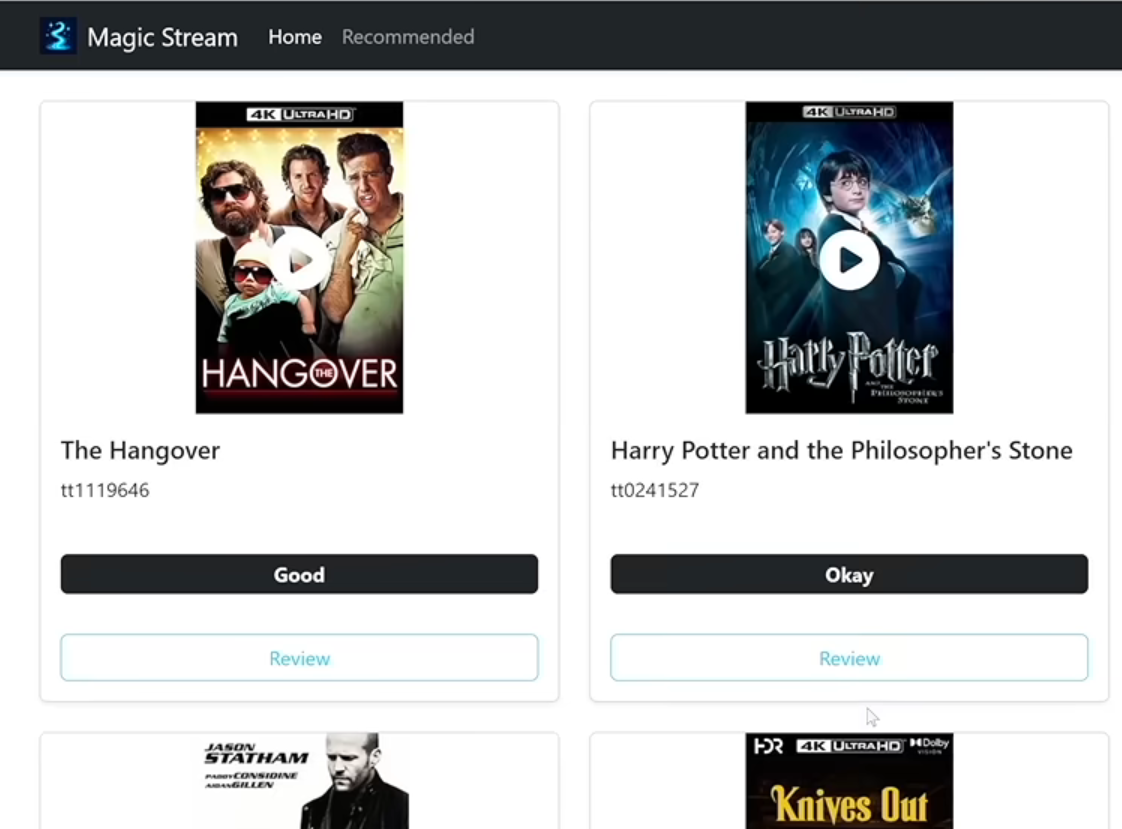
Recommendations without the creep factor: building MagicStream's engine
Streaming recommendation engines have a reputation problem: they either feel eerily precise or embarrassingly wrong. We wanted MagicStream to feel useful without feeling like it's reading too much into a single late-night watch.
The stack
MagicStream runs on React on the frontend, Go for the backend services, and MongoDB for storage. The recommendation model consumes watch history and ratings, not browsing behavior outside the watch itself — we don't track what you hovered over.
Cold start is the real test
Any engine looks smart once it has months of history to work with. The harder problem is a brand-new account with two or three watched titles. We weight genre and cast overlap heavily early on, and let collaborative signals take over gradually as history builds up, rather than making early guesses too confidently.
Fewer repeats, on purpose
A common failure mode is a recommendation list that's technically accurate but just reshuffles the same five titles every session. We added explicit recency decay so something recommended and ignored last week doesn't dominate this week's list.
What "AI-driven" means here
It's not a chatbot bolted onto a movie catalog. It's a ranking model doing one job well: given what you've actually watched, order the catalog so the next thing you'd want to watch is near the top.
Comments (0)
No comments yet. Be the first to share your thoughts.